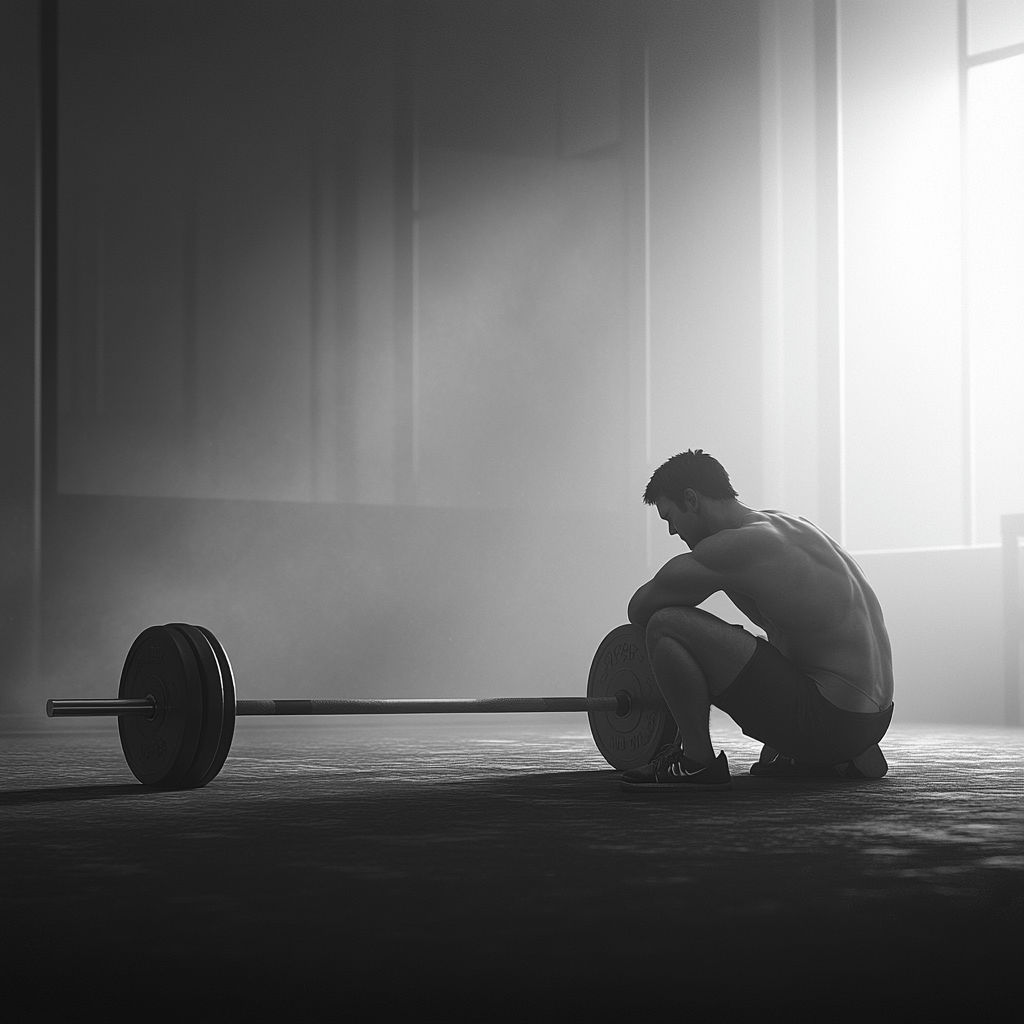
Causes of RDL-induced lower back pain
Poor form
The most common cause of lower back pain from RDLs is poor form. Many people make the mistake of treating RDLs like squats or traditional deadlifts by lifting straight up without hinged hips. People tend to lift vertically with their lower back instead of backward with their glutes and hamstrings.
Pro tip: Imagine “pulling” the weight back and up, almost as if you were attempting to push your hips back rather than simply standing straight upright. This minor mental shift changes the intention and effectiveness behind the movement. The deadlift is designed for a specific set of muscles—glutes and hamstrings with complimentary help from your lower back.
Lifting with a jerking motion
One of the leading causes of back pain during RDLs is poor lifting technique, particularly yanking the weight up. This rapid, uncontrolled movement moves the weight away from the muscles that must be engaged and puts too much tension on the lower back. The key to safely executing an RDL is control. Remember: hinge at the hips instead of a rapid or explosive lift.
Not warming up properly
Going to RDLs with cold muscles is a recipe for disaster. Tight hamstrings or an ill-prepared lower back can cause compensations, which means your lower back takes on more stress than it should. Spend a few minutes warming up, emphasizing dynamic stretches, mainly for the hamstrings and glutes. Leg swings, glute bridges, and even mild cardio can make a big difference.
Maxing out too soon
Maxing out on heavy lifts can be beneficial for gaining strength but it can come with a price. The saftest way to max out while preventing injury is to perfect your form while maintaining a respectable progression. Jumping directly to your maximum weight without allowing for a gradual build-up frequently results in damage, including lower back pain. Always be aware of progressive overload, which involves gradually increasing weight while maintaining proper technique. Maxing out on occasion is acceptable, but doing so without proper preparation will most likely result in more harm than benefit.
Quick Fixes
Fix your form
Hinge at the hips and engage your hamstrings and glutes. Avoid curving your back or lifting with momentum.
Lower the weight
If the weight is too high, your lower back may compensate for weaker muscles. Lighten the load to keep a good posture.
Rest and recover
If the pain continues, take a break from deadlifts, and potentially lifting as a whole. To minimize tension, reduce inflammation and practice mobility and flexibility exercises.
Strengthen your core
A weak core can cause the lower back to overcompensate. The stronger and more engaged your core is, the less stress is placed on the spine—a similar rule applies to the glutes.
Try alternative exercises
Single-Leg Dumbbell RDL: Works the hamstrings and glutes while minimizing lower back stress.
Hamstring Curls: This exercise isolates the hamstrings while applying minimal strain to the back.
Reverse hyperextensions: Strengthen the posterior chain while relieving lower back stress.
Glute Bridges: A low-impact workout for glutes and hamstrings.
Can chiropractors like Back Stop fix RDL Pain?
Definitely! Like most standard Chiropractor’s clinics, here at Backstop Chiropractic we specialize in treating the underlying causes of lower back pain, particularly pain associated with activities such as Deadlifts.
Muscle problems, poor spinal alignment, or stiffness in adjacent muscles such as the quadratus lumborum (QL) and psoas are common causes of back pain or tightness when or after lifting. That is where we step in.
Here’s how we help:
1. Spinal adjustments.
Poor spinal and joint alignment might put extra strain on your lower back while performing RDLs. Our adjustments restore normal alignment, alleviate pressure, and help your body to move more freely.

2. Muscle Stress Relief.
Tight muscles such as the QL and psoas can lead to back pain. We apply specific techniques to relieve tension, improve mobility, and alleviate discomfort.
3. Practical Advice
We offer specific assistance in correcting your form and strengthening weak areas, allowing you to execute RDLs safely and lower the chance of future suffering.
4. Tailored Relief
Backstop’s approach goes beyond simple tweaks. We provide a complete approach to recovery, including manual therapy and rehab exercises, that will allow you to lift pain-free again.
Muscle Pain Fixes
Muscle Pain
Lower back pain during RDLs is commonly caused by stiffness in important muscles around the spine, particularly the quadratus lumborum (QL) and psoas. These muscles stabilize the spine and hips, and when they get stiff or overworked, they may trigger pain and ruin your form.
The QL is the biggest spinal stabilizing muscle in the lower back. When the muscle becomes tight, can strain unevenly on your back, producing pain during hip-hinge motions such as RDLs.
Fixes: Massage→Stretch→Strengthen, rest, reduce inflammation.
2) Psoas
The psoas join your spine and hips, assisting with hip flexion. Tight psoas muscles may result in an anterior pelvic tilt, which puts tension on the lower back.
Fix: Stretch, mobility exercises, not sitting for long periods, and deep-tissue massage.
3. Surrounding spinal muscles.
The erector spinae, is a surrounding spinal muscle, that can cause lower back pain when tense.
Fix: Flexibility and strengthening can yield benefits. The stronger your erector spinae becomes, the more protected and bulletproof your spine becomes.
 Back Stop Chiropractor
Leave a comment